WhatDefinesaLuxuryDeveloperinAhmedabadinToday'sResidentialMarket?
Date : 2026-11-20
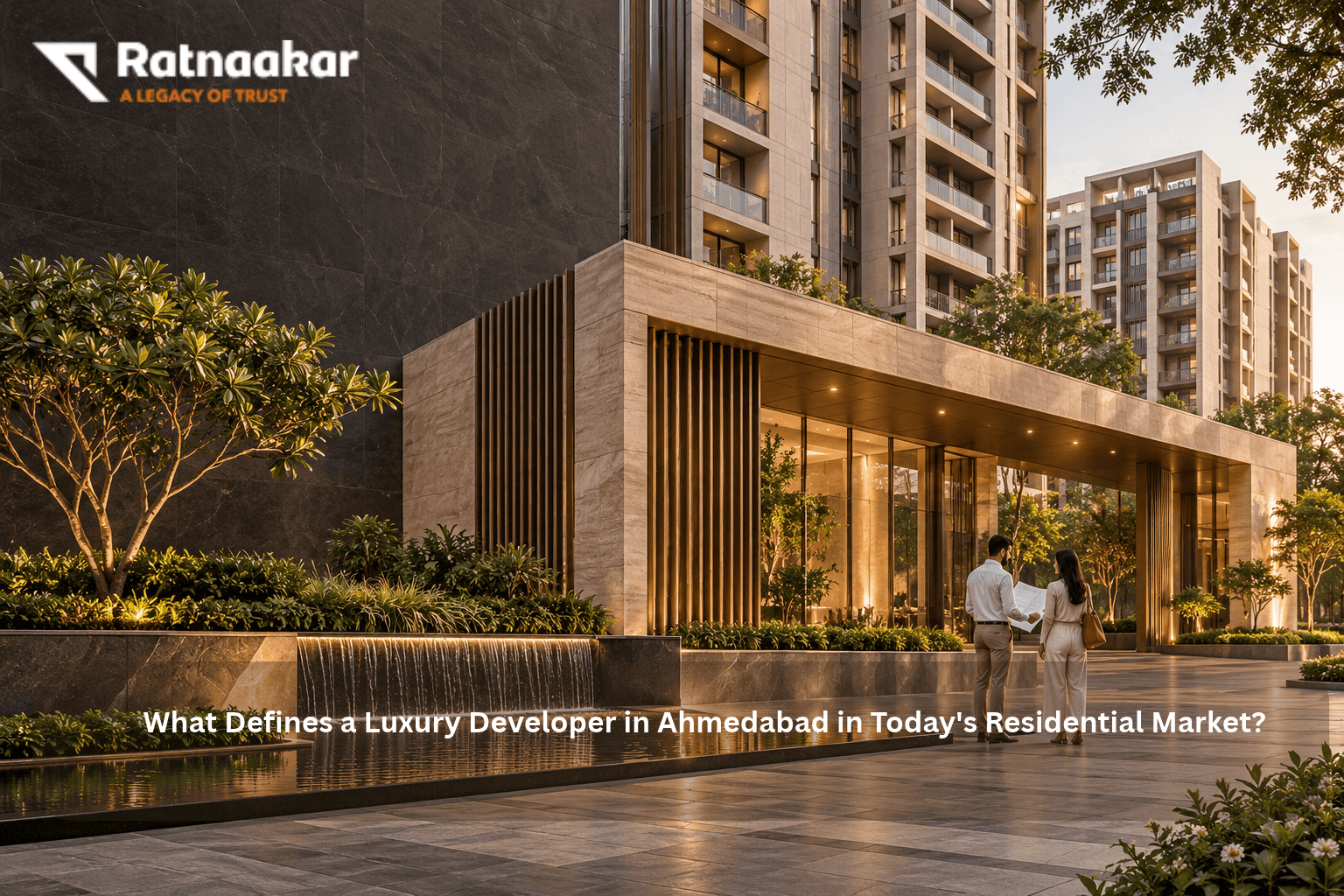
A luxury developer in Ahmedabad is not defined by the brochure, the sample flat or the size of the launch event. It is defined by four things a buyer can actually check: a delivery record you can walk through, discipline in where and how densely it builds, specifications that hold up years after handover, and how it behaves once the sales office has closed.
Everything else is presentation.
That difference matters more today than it did even five years ago. Ahmedabad's housing market has grown up quickly, and the word "luxury" now sits on far more hoardings than it used to. This guide breaks down what separates a project that is marketed as luxury from a developer that actually builds it.
Table of Contents
- Why This Question Matters More in 2026
- A Track Record You Can Walk Through
- Land Choices That Show Restraint
- Planning Decisions Made Before the First Brick
- Specifications You Can Verify, Not Just Admire
- Range Without Diluting Standards
- What Happens After the Keys Are Handed Over
- Transparency in the Paperwork
- A Quick Checklist Before You Choose
- Mistakes Buyers Still Make When Judging a Developer
- The Bottom Line
Why This Question Matters More in 2026
Ahmedabad is no longer a city that sits quietly behind the bigger metros. According to PropEquity, Ahmedabad can now be regarded as a tier-1 housing market, having moved ahead of several established tier-1 cities in both new launches and absorption (Source: The Realty Today, citing PropEquity).
The top end of the market is growing with it. Cushman & Wakefield recorded 7,380 residential launches in Ahmedabad in Q3 2026, with high-end and luxury segments showing strong growth. In the last quarter of 2025, high-end and luxury homes made up about 22% of the city's new launches (Source: Cushman & Wakefield, Ahmedabad MarketBeat).
More supply at the top means more choice. It also means more noise. When five towers on the same stretch all call themselves luxury, the label stops telling you anything useful. The developer behind the label starts telling you almost everything.
A Track Record You Can Walk Through
Renders show intent. Completed buildings show outcome.
The most honest test of any developer is a project it handed over eight or ten years ago. Visit one on a weekday evening, not during a site event. Look at things a render can never show you:
- Has the facade aged well, or is it stained and patched?
- Are the lift lobbies and common corridors still in good shape?
- Did the landscaping mature, or quietly disappear?
- How do residents speak about the builder when no salesperson is around?
Longevity matters for another reason. A developer that has worked through several market cycles has delivered homes through slowdowns, approval delays, and cost spikes, not only in good years. Ratnaakar, for example, has been building in Ahmedabad since 1995 (Source: ratnaakar.com), and buyers can see its completed projects in Ahmedabad for themselves rather than relying on a presentation.
Land Choices That Show Restraint
A luxury developer is careful about where it builds before it thinks about what it builds.
The question is simple: will this address still feel premium fifteen years from now? That depends on things a buyer can observe today. Established schools and hospitals nearby. Roads that are already built, not just promised. Green cover. A neighbourhood that has matured instead of one that is still waiting to arrive.
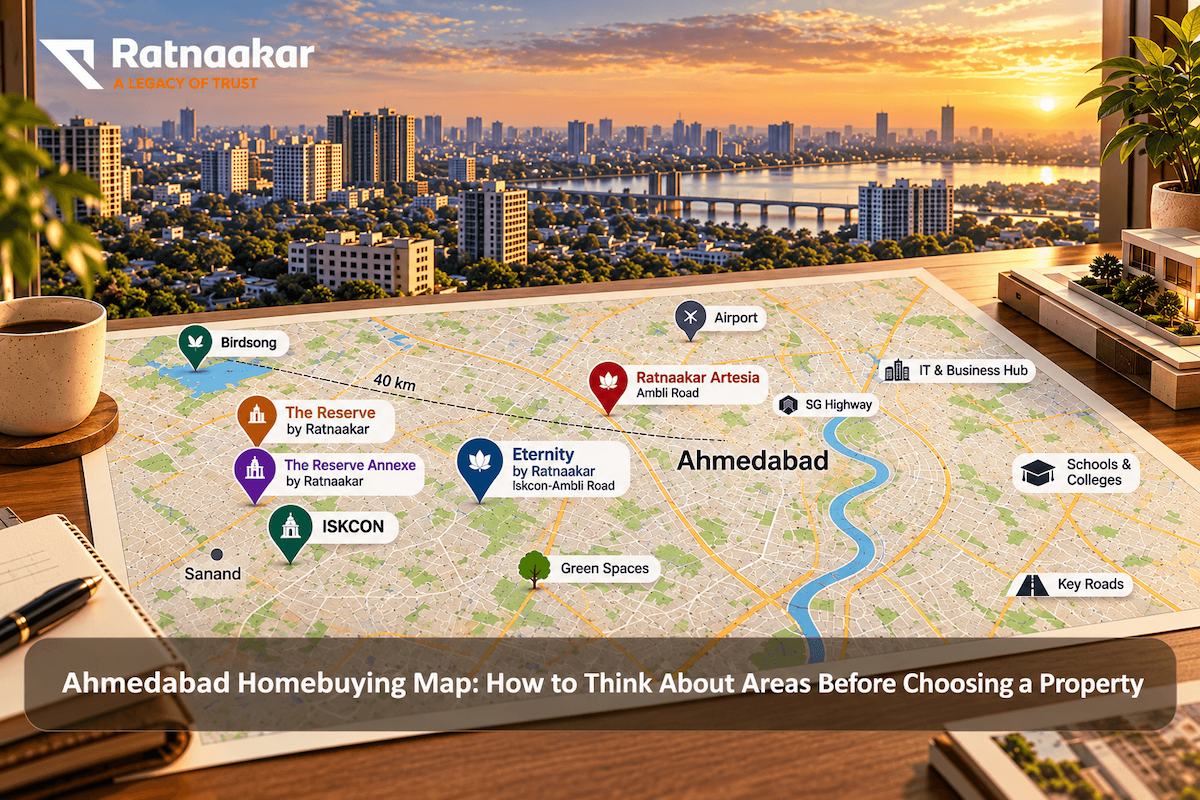
This is why stretches like ISKCON–Ambli Road and the established pockets off SG Highway continue to draw serious buyers. If you are looking at luxury 5 BHK apartments on ISKCON–Ambli Road, you are paying for an address whose character is already settled. We have looked at that neighbourhood in more detail in why ISKCON–Ambli Road is becoming Ahmedabad's most luxury-centric neighbourhood.
Restraint also shows up in density. Ask how many homes sit on the land and how much of the plot is genuinely open. A developer willing to build fewer homes on a good piece of land is telling you something about its priorities.
Planning Decisions Made Before the First Brick
The most expensive choices in a luxury home are made on paper, long before construction starts. They are also the hardest to fake.
Fewer homes per floor. A private lift lobby. A separate service entry so staff movement doesn't cross the living room. Bedrooms that don't look straight into the neighbour's balcony. Windows placed for cross-ventilation rather than for the render.
In Ahmedabad, climate is part of planning too. Long, hot summers mean orientation, shading and glazing affect daily comfort and electricity bills far more than an imported light fitting does. A developer that plans around west-facing glass and deep shaded balconies is designing for the people who will live there, not for the brochure photograph.
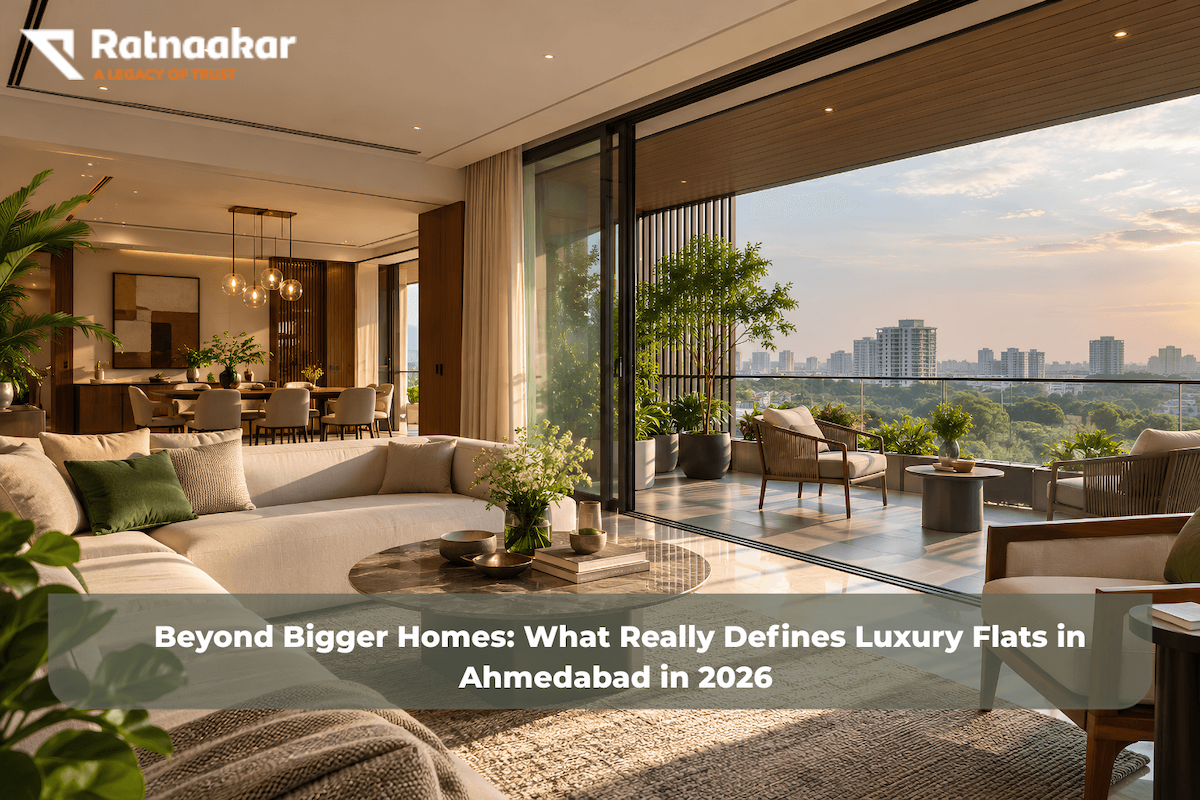
We explored these home-level details in what really defines luxury flats in Ahmedabad. The point here is different: these decisions tell you how the developer thinks.
Specifications You Can Verify, Not Just Admire
The sample flat is built to impress. The specification annexure in your agreement is what you are actually buying.
A luxury developer is comfortable putting the details in writing: flooring, sanitaryware and fitting brands, window and glazing systems, waterproofing method, electrical load per home, and backup provisions. If the answer to "is this in the agreement?" is vague, treat that as information.
The law sets a floor, not a ceiling. Under Section 14(3) of the Real Estate (Regulation and Development) Act, 2016, a developer must fix structural defects and defects in workmanship or quality reported within five years of possession, at no extra cost to the buyer (Source: Housing.com). A developer confident in its construction treats this as the baseline.
A simple test: ask to see a home from an older project with the same specification level. The finish after six or seven years of daily use tells you more than any showroom.
Range Without Diluting Standards
Mature developers in Ahmedabad rarely build only one kind of home. Many work across apartments, independent homes, plotted communities, and weekend homes. That range is useful for buyers, but only if the same standards carry across every format.
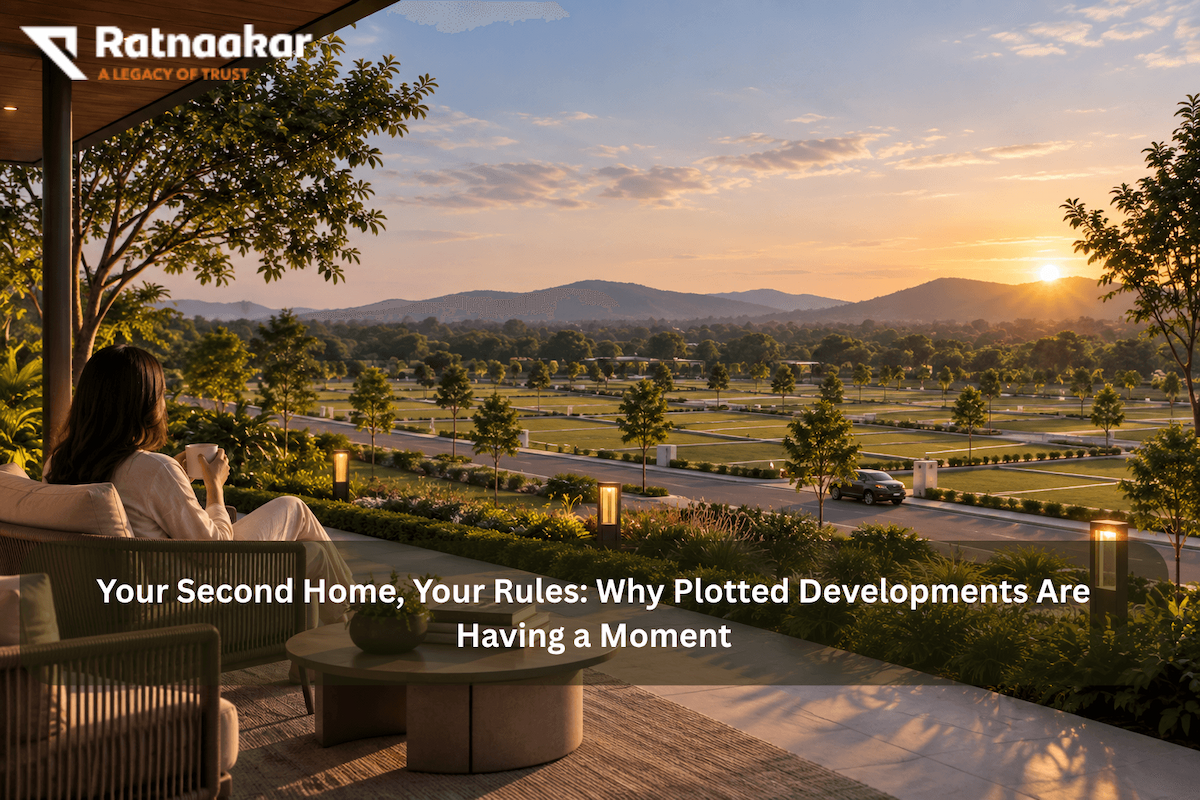
If your family needs more space vertically, look at how the developer handles luxury 4 BHK flats in Ahmedabad. If you want ground-level living with a garden, compare its 4 and 5 BHK bungalows in Ahmedabad. If you would rather design your own home, see whether its plots for sale in Ahmedabad come with finished roads, utilities and community planning, or just demarcated land. And if you are thinking about a retreat, see how its weekend villas near Ahmedabad are maintained when owners are away.
Ratnaakar's own portfolio follows this pattern, from apartment living at Eternity by Ratnaakar to the plotted community at The Reserve Annexe and weekend homes at Birdsong. The useful question for any developer is the same: does the quality stay consistent from one format to the next?
What Happens After the Keys Are Handed Over
This is where many "luxury" projects quietly fall short. A building looks its best on possession day. What keeps it that way is management. Before you buy, ask:
- Who runs the property in the first few years, and how is the handover to the residents' association planned?
- How are snag lists raised, tracked and closed, and how long does it usually take?
- What does the maintenance corpus cover, and who decides how it is spent?
- Is there a facility team on site, or a contractor who visits when called?
Then check the answers against reality by speaking to residents of an older project. Response time on a leaking pipe tells you more about a developer than its tagline does.
Transparency in the Paperwork
A luxury developer answers difficult questions in writing, without being chased.
That means a project registered with Gujarat RERA, approved plans that match what the brochure shows, carpet area stated clearly instead of hidden behind super built-up figures, a payment schedule linked to construction stages, and clean land title documents shared for your lawyer to review.
None of this is glamorous. All of it protects you.
A Quick Checklist Before You Choose
What to judge | What a luxury developer shows | How to check it |
|---|---|---|
| Track record | Projects that have aged well | Visit a project handed over 8 to 10 years ago |
| Land and location | Settled, well-connected addresses | Check schools, roads and green cover that exist today |
| Density | Fewer homes, more open space | Ask for homes per floor and open-space share |
| Planning | Privacy, ventilation, climate-aware design | Study the floor plan and orientation, not the render |
| Specifications | Brands and systems listed in writing | Read the agreement annexure |
| After-sales | A clear maintenance and snag process | Talk to residents of an older project |
| Paperwork | RERA, approved plans, clear title | Check the RERA portal and have documents reviewed |
Mistakes Buyers Still Make When Judging a Developer
- Judging by the launch event. A grand launch says something about the marketing budget, not the construction team.
- Buying the sample flat. Show flats often carry upgrades that are not part of the standard specification.
- Comparing only rate per square foot. Two projects with similar rates can differ sharply in usable area, density, and finish.
- Skipping the old project visit. It is the single most useful hour you can spend before booking.
- Ignoring post-possession questions. Maintenance decides how your home feels in year five, not year one.
The Bottom Line
In a market where almost every new tower uses the word luxury, the developer matters more than the label. Look for a record you can walk through, land chosen with restraint, plans that put daily life first, specifications written into the agreement, and a team that stays responsible long after possession.
If a developer passes these tests, the project usually takes care of itself. If it doesn't, no clubhouse will make up for it.
FAQ'S
A luxury developer in Ahmedabad is defined by its delivered projects, careful land selection, low-density planning, verifiable specifications and dependable after-sales management. Price and branding alone do not make a developer luxury; how its older buildings have aged is usually the clearest proof.